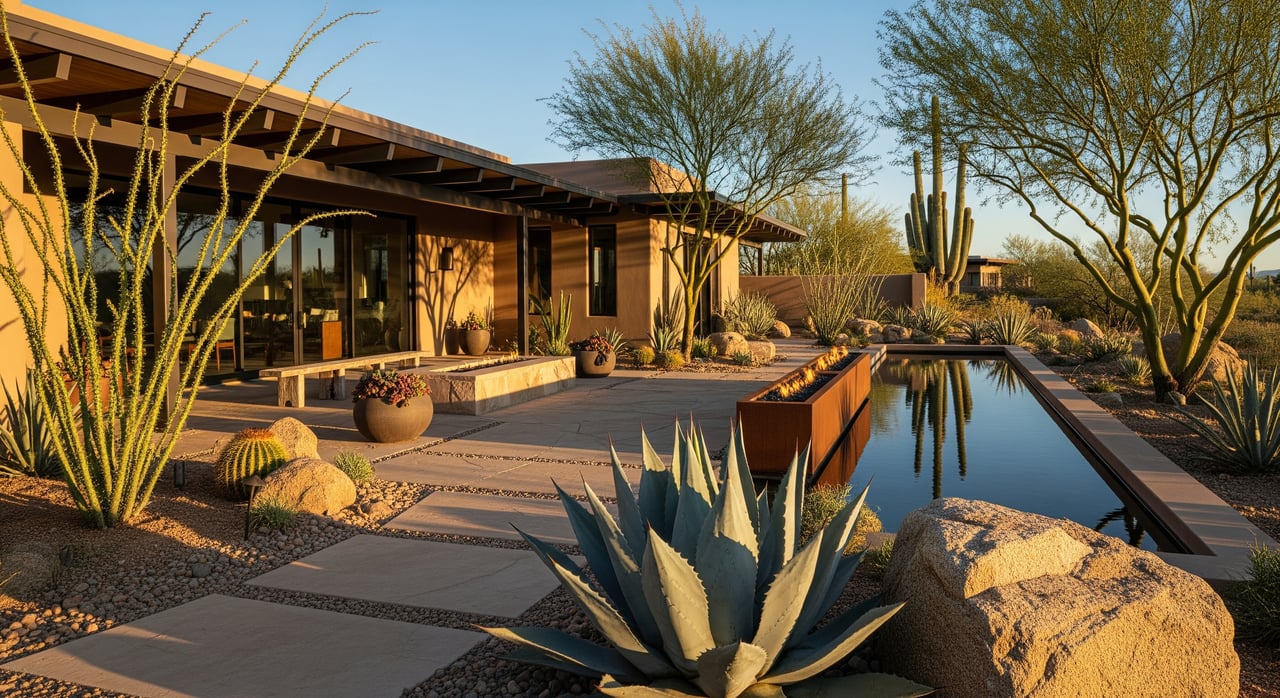
Is your Cave Creek yard fighting the desert instead of working with it? You can have striking curb appeal that feels natural, uses less water, and stands up to summer heat. Whether you are prepping to sell or planning upgrades after a recent purchase, a smart desert landscape can boost value and lower maintenance. Here is how to create a low-water, high-impact look tailored to Cave Creek’s Sonoran Desert conditions. Let’s dive in.
Cave Creek climate essentials
Cave Creek sits in the Sonoran Desert, which means very hot summers, mild winters, and low rainfall that arrives in bursts during monsoon and winter storms. Microclimates matter: south and west exposures bake, shaded or higher-elevation areas run cooler, and slopes need erosion-minded design. Many lots have rocky, well-draining soils that favor drought-adapted plants. If your home is near natural desert, consider wildfire risk and plan for defensible space around structures.
Before you make major changes, verify rules with the Town of Cave Creek, Maricopa County, your water provider, and any HOA. Some communities regulate plant palettes, front-yard appearance, and lighting. There may also be water-use restrictions or rebate programs for turf removal and irrigation upgrades. A quick check up front saves time and prevents costly rework.
Plan your xeriscape
Start with a simple site plan that maps sun, shade, views, utilities, and existing plants worth keeping. Group plants by water needs into clear hydrozones so you only water what needs it. Keep soil improvements focused at planting holes and use mulch to reduce evaporation and soil temperature. Design pathways and hardscape with permeability in mind so rain soaks in instead of running off.
Curb appeal for sellers
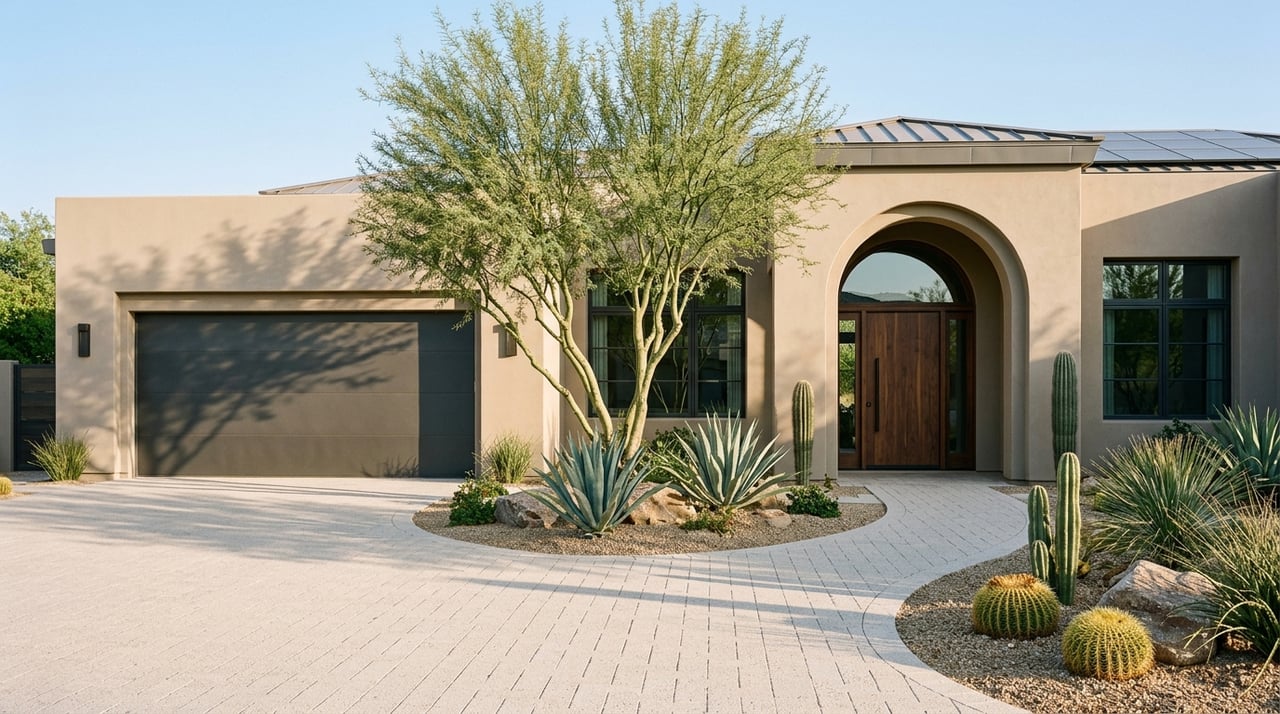
If you are listing soon, target visible, low-maintenance upgrades in the front yard. Add one striking specimen tree, a clean decomposed granite path to the entry, and simple low-voltage lighting for evening warmth. Use a restrained palette of native or drought-adapted plants and a tidy gravel finish. Reduce or remove turf unless it serves a clear purpose.
Whole-yard plans for buyers
If you are staying put, plan a phased conversion that starts with irrigation and drainage. Add shade structures for comfort, create microcatchments or swales to slow and sink stormwater, and reserve space for long-lived trees. Mix habitat-friendly plants that support pollinators and birds for a lively, authentic Sonoran feel. Build in flexibility so you can add boulders, pathways, or a small seating area later without tearing up irrigation.
Best desert plants
Choose native and desert-adapted plants that thrive in Cave Creek’s heat and lean soils.
- Trees for shade and presence: Palo Verde, Mesquite, Desert Willow, and Ironwood. These are durable, beautiful anchors with seasonal interest.
- Shrubs and structure: Brittlebush, Creosote bush, Fairy duster, and Chuparosa for color and pollinator value.
- Cacti and succulents: Ocotillo, Agaves, Yuccas, Barrel cactus, and select Prickly pear for sculptural accents.
- Perennials and groundcovers: Salvia, Penstemon, and Desert Marigold for seasonal color; choose native groundcovers suited to your microclimate for erosion control.
Use caution with high-water or invasive species. Avoid large areas of turf and do not plant buffelgrass, which is invasive and increases fire intensity. If you include Prickly pear, monitor it for pests and spread.
Smart irrigation and drainage
Use drip irrigation or micro-spray for beds and bubblers for trees instead of traditional spray heads. Install pressure-compensating emitters, and size and place them for both current root balls and future growth. A smart controller that adjusts for temperature and seasons will reduce waste; run early in the morning to curb evaporation.
New plants need more frequent watering until established, which can take months to a couple of years depending on size and species. After establishment, shift to deep, infrequent watering aligned with plant needs. Avoid common mistakes like overwatering, failing to adjust for monsoon season, or placing emitters too far from the roots.
For drainage, grade gently so water flows away from the house and toward planting areas. Dry creek beds, swales, and microcatchments can slow runoff and help plants make the most of rare rains. Rainwater harvesting with barrels or cisterns is a helpful supplement where allowed.
Hardscape, mulch, and lighting
Use decomposed granite pathways, flagstone, permeable pavers, and well-placed boulders to define space while allowing water to soak in. Keep hardscape simple and purposeful to highlight the home and improve flow.
Mulch choices affect both looks and plant health. Decorative gravel or decomposed granite is durable and low maintenance but can reflect heat. Organic mulch like wood chips cools root zones and improves soil biology, though it needs periodic replenishment. A combination works well: organic mulch in planting rings and gravel across open areas.
For lighting, choose shielded, low-voltage LED fixtures with warm color temperature around 2700K to 3000K. Light paths, key steps, and one or two specimen trees for safety and ambiance. Use timers or smart controls to save energy. Confirm HOA and electrical rules before installing permanent lighting.
Fire-wise landscape near homes
If your property borders native desert, plan for defensible space. Reduce continuous fuel near structures by spacing plants thoughtfully and keeping them trimmed. Remove invasive, high-fire-risk grasses like buffelgrass wherever they appear. Maintain clean gutters and keep mulch and plant debris away from foundations. Select low-water, desert-adapted plants and maintain them with seasonal pruning.
When to plant and phase work
The best time to plant most desert trees and shrubs is fall through early spring. Cooler weather lets roots establish before summer heat. If you are doing a larger conversion, phase it:
- Survey and plan: map sun, slope, utilities, and plants to keep.
- Grade for drainage; remove turf and invasives.
- Install drip irrigation and a smart controller; test thoroughly.
- Plant trees and backbone shrubs; add mulch.
- Add accents, pathways, boulders, and lighting.
- Tune irrigation seasonally and maintain for establishment.
Costs, savings, and value
Project cost varies with scope, from a simple front-yard refresh to a full-yard conversion. Get multiple bids and compare designs, plant sizes, and irrigation details, not just price. A well-designed xeriscape can lower your outdoor water use and ongoing maintenance. For sellers, a tidy, cohesive front yard with shade, defined paths, and subtle lighting often delivers the best cost-to-impact ratio.
Quick start checklist
- Confirm HOA, town, and utility rules or rebates.
- Map sun, shade, slope, and views; identify what to keep.
- Create hydrozones; choose native and drought-adapted plants.
- Install drip irrigation with a smart controller; group by water needs.
- Grade for drainage; add microcatchments where appropriate.
- Blend organic mulch at plantings with decorative gravel elsewhere.
- Add one specimen tree, clean pathways, and warm LED lighting.
- Plan seasonal maintenance and irrigation adjustments.
Local guidance and next steps
Every property is different, from microclimate to HOA standards. A tailored plan that respects Cave Creek’s desert conditions will save water and elevate your home’s appeal. If you would like a thoughtful strategy for pre-list projects or a phased upgrade plan after closing, reach out to Mary Jones for local, consultative guidance.
FAQs
What is xeriscape for Cave Creek homes?
- Xeriscape is a planning approach that groups plants by water needs, uses native or drought-adapted species, relies on efficient drip irrigation, and incorporates mulch and permeable hardscape to reduce water use.
How do I handle irrigation in monsoon season?
- Use a smart controller and adjust schedules seasonally so plants get deep, infrequent watering; reduce run times when rain arrives and water early in the morning to cut evaporation.
Which native plants add curb appeal fast?
- Consider Desert Willow or Palo Verde for a focal tree, Brittlebush or Fairy duster for color, and architectural accents like Agave or Ocotillo for structure with low water needs.
Is rock mulch or wood mulch better in the desert?
- Both work; gravel is durable and low maintenance, while wood mulch cools roots and improves soil. A combined approach is effective, using wood around plants and gravel in open areas.
How do I reduce wildfire risk near my home?
- Maintain defensible space by spacing and pruning plants, removing invasive grasses like buffelgrass, keeping debris and mulch away from foundations, and following local fire guidance.
Do I need permits for irrigation or lighting upgrades?
- Check with the Town of Cave Creek, Maricopa County, your water provider, and your HOA. Small drip systems may not need permits, but electrical work for lighting can require approval.
When is the best time to plant desert trees and shrubs?
- Plant in fall through early spring so roots establish during cooler months, which helps plants handle summer heat with less stress.