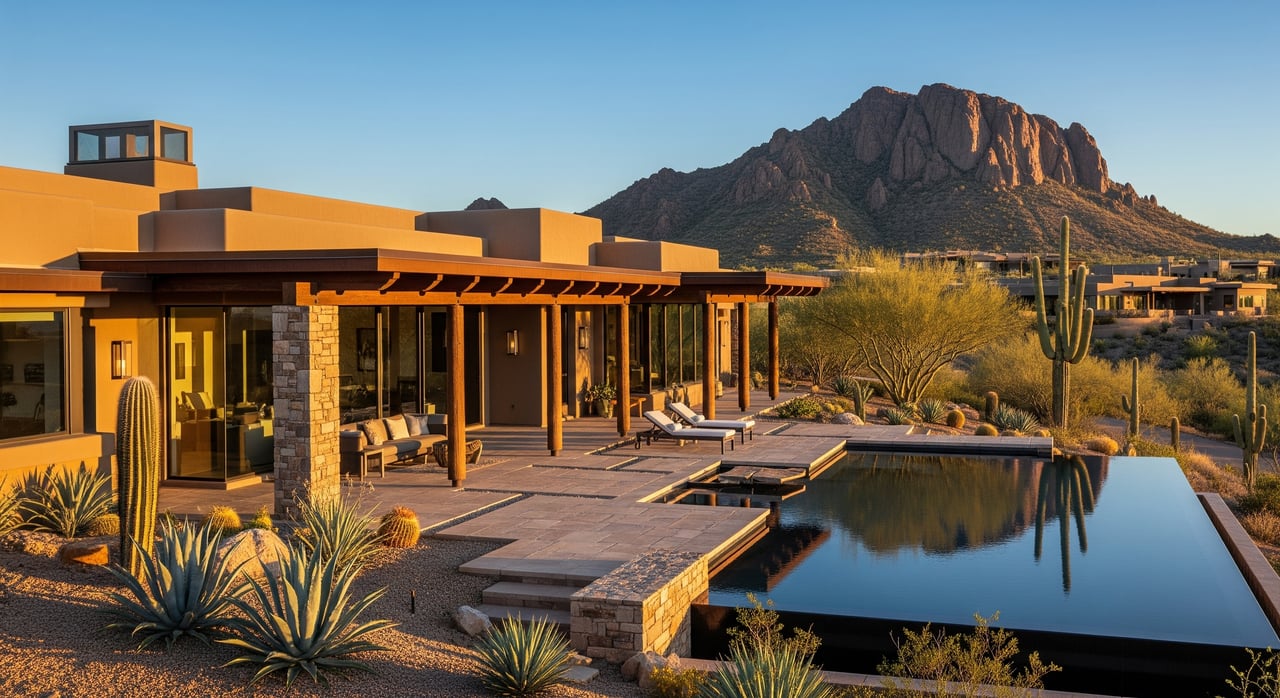
If you have ever tried to price a luxury property in Cave Creek, you know two homes that look similar on paper can trade very differently. The secret is in the micro-markets. Views, usable acreage, equestrian function, and trail access can move price more than square footage alone. In this guide, you will learn how these factors work in Cave Creek and when to pursue a bespoke valuation for one-of-a-kind estates. Let’s dive in.
What “luxury” means in Cave Creek
Luxury in Cave Creek is not a single price point. It reflects the top segment of local sales and the features that matter to buyers here: panoramic views, privacy, land utility, and equestrian capability. Because the town is low density, you will see fewer direct comps at the top end, which makes precise pricing more art and science than a simple price-per-foot.
For many sellers and data-minded buyers, the right approach is to define luxury as the top tier of recent Cave Creek sales and active competition. Cross-check that with nearby markets like Carefree and North Scottsdale when comps are limited. Then weight the micro-market drivers that are specific to your parcel.
Cave Creek micro-markets that move price
Ridgeline and mountain-view parcels
Parcels on or near Black Mountain and surrounding ridges often command a premium for unobstructed vistas. The permanence of the view matters. A protected view corridor usually supports stronger pricing than a view that could be obstructed by future infill on adjacent lots.
Key steps: confirm buildable areas on neighboring parcels, check slope and setbacks, and document the view from key rooms. Drone photography helps show buyers what they are paying for.
City-light and sunset orientations
City-light views toward Phoenix or Scottsdale and dramatic sunset exposures can add a meaningful premium. Elevated rim sites with wide-angle views tend to outperform partial or framed views. The quality of the outlook and how many living spaces capture it both matter.
Pricing tip: treat view quality as a separate line item when comparing to similar homes without the same outlook. Photographs and site plans help support your adjustment.
Acreage and ranchettes
Buyers pay for usable acres more than raw acreage. Washes, slope, and access can reduce utility and net value. On larger sites, potential subdivision or alternative uses may require a highest-and-best-use analysis rather than a simple house-plus-land price.
Expect stronger pricing for parcels with good access, reasonable grading costs, and clear buildable envelopes. The more usable the site, the deeper the buyer pool.
Equestrian and horse-community properties
Cave Creek has a strong equestrian identity. Properties with the right zoning, well-designed barns, arenas, and turnout areas are highly sought by a specialized buyer pool. That pool is smaller, so liquidity can be different from non-equestrian estates, but turnkey facilities in good condition often price above similar homes without them.
Focus on functionality: safe access to trails, footing and drainage in arenas, water distribution, fencing quality, and proximity to equestrian services. Substandard or deferred barns can drag on value.
Town-edge luxury and infill
Closer-in estates trade off smaller acreage for faster access to Cave Creek amenities. For some buyers, that convenience offsets a smaller lot. For others, privacy and land utility win. Knowing which pool you are targeting helps you price more confidently.
The five features that shape value most
1) Views: quality and permanence
View premiums are real in Cave Creek. Appraisers typically handle them through the sales comparison approach and adjust up or down based on view quality. The stronger and more permanent the view, the larger the potential premium.
How to support a view adjustment:
- Grade the view: panoramic vs. partial vs. framed, plus day and night performance.
- Prove permanence: verify zoning, buildable areas next door, and recorded height limits where applicable.
- Document thoroughly: high-quality photos and drone footage from key sightlines.
2) Usable acreage vs. raw acres
Usable acres usually drive pricing more than the total number of acres. Slope, washes, and easements can reduce utility and add site costs.
Pricing tactics that often help:
- For 1 to 5 acre differences, consider a per-usable-acre adjustment or segmented pricing (house value plus residual land value).
- For large parcels, a highest-and-best-use or development residual approach may be appropriate.
- Account for site costs: grading, driveways, retaining walls, and drainage can lower net value.
3) Equestrian zoning and improvements
Equestrian features attract a passionate but specialized buyer pool. Well-designed barns, stalls, tack rooms, fenced paddocks, and arenas in good condition can support a premium. Outdated or DIY improvements may require a discount.
What equestrian buyers prioritize:
- Reliable water, safe access to trails, and thoughtful layout for daily care.
- Quality footing, drainage, lighting, and ventilation.
- Documented zoning and permits for the improvements.
4) Trail access and open space
Legal and convenient trail access is a measurable amenity. Properties that back to public open space or connect to maintained trail networks often command higher prices than similar homes without access.
To support a premium:
- Confirm legal access or easements through public records.
- Reference maintained public trails rather than informal paths.
- Show proximity to trailheads and networks in your marketing package.
5) Custom builds vs. spec homes
Custom homes can command a premium when design, finishes, and site integration are exceptional. They are also harder to price because true comps are scarce. Spec homes generally track the market more closely and compete directly with similar recent sales and active listings.
For custom builds, appraisers may rely more on the cost approach alongside adjusted comps. For spec homes, current buyer preferences and time on market carry more weight. Very bespoke layouts or finishes can narrow the buyer pool and may require a pricing concession.
How to price when comps are thin
The sales comparison approach is still primary for luxury residential pricing in Cave Creek. Use nearby markets like Carefree and North Scottsdale to expand your search when necessary, then weight comps by matching the site, view, equestrian capacity, and road conditions before square footage. MLS data from resources like ARMLS can help you track transactional comps and days on market.
The cost approach can be particularly helpful for newer custom residences and unique improvements. It blends land value with the depreciated replacement cost of the home and any equestrian facilities. For properties with rental income or development potential, an income or feasibility lens may inform pricing, but it is usually supportive rather than primary for owner-occupied homes.
When you make adjustments, document the reasoning. Use matched pairs when possible, gather notes from listing histories, and cross-check with local broker insights. Align your adjustments to the features that Cave Creek buyers value most: usable acreage, view quality, equestrian functionality, and legal access to trails.
When to order a bespoke valuation
Consider a custom appraisal or market study if any of the following apply:
- Your parcel sits on a premium ridgeline or has a rare, protected view corridor with no close recent comps.
- The equestrian facilities are atypical in scale or quality and will attract a specialized buyer pool.
- Acreage is large enough that subdivision or conservation is a realistic alternative use.
- The residence is highly customized in layout or finish and does not map cleanly to recent sales.
- You need a defensible opinion for estate, tax, or legal purposes.
To streamline the process, prepare a complete documentation package. Include a detailed photo set with drone shots, floor plan and site plan, permits for the residence and any barns or guest structures, surveys, road maintenance or HOA agreements, and any prior valuations.
Due diligence that protects value
Luxury buyers in Cave Creek expect clarity on land utility and long-term livability. Pull these records early:
- Parcel data and legal description. Verify lot size, easements, and buildable areas through the Maricopa County Assessor and county records.
- Zoning and permitted uses. Confirm equestrian and accessory building allowances with the Town of Cave Creek Planning and Zoning resources.
- Permits and inspections. Ensure residence, barns, arenas, guest houses, and conversions are properly permitted.
- Water and septic. Gather well permits, septic records, and any water quality tests. Flag any limitations or service availability.
- Utilities and access. Note power, gas, internet capacity, and who maintains the road (public vs. private). Include any road or HOA maintenance agreements.
- Floodplain and washes. Verify status on the FEMA Flood Map Service Center and county floodplain maps to assess insurability and development constraints.
- Topography and soils. Steep lots benefit from recent topo surveys and geotechnical reports to quantify usable acreage and site costs.
- Easements and restrictions. Identify conservation easements, deed restrictions, and any archaeological or preservation overlays that could limit future development.
- Trail access rights. Document legal trail easements and adjacency to public open space where applicable.
For equestrian features, assess structural integrity, footing, drainage, fencing, water distribution, manure management, lighting, and ventilation. A property that is turnkey for horse care can justify a higher price relative to one that needs significant upgrades.
Seller and buyer strategies in micro-markets
Set expectations on time to sell. Luxury homes in low-density areas often take longer to find the right buyer. Model carrying costs and consider seasonal timing for maximum exposure to the regional and second-home buyer pool.
If you are a seller, spotlight the features that truly move value in Cave Creek. Prove view permanence with maps and neighboring constraints. Quantify usable acreage. Document legal trail access. Present equestrian improvements in a clear, functional way. Small upgrades that improve usability or reduce buyer uncertainty can have positive ROI.
If you are a buyer, approach pricing with a framework. Rank the features you value most, verify permanence and permits, and weigh liquidity when a home has very specialized features. When the data is thin or the property is unique, a bespoke valuation can provide confidence and negotiating clarity.
Tools and references to ground your pricing
- For transactional data and days on market, reference ARMLS.
- For parcel boundaries, easements, and assessed attributes, use the Maricopa County Assessor and county GIS.
- For zoning, trails, and development standards, consult the Town of Cave Creek.
- For flood status and wash impacts, start with the FEMA Flood Map Service Center and county floodplain resources.
- For methodology on unique residential properties, review the Appraisal Institute guidelines.
- For macro luxury and rural trends, see the National Association of Realtors research for context.
Your next step in Cave Creek
If you are preparing to sell or buy a luxury property in Cave Creek, the right pricing strategy starts with the right local lens. Micro-markets here reward careful documentation and a clear story around views, usable acreage, equestrian capacity, and trail access. When comps are scarce, a tailored valuation can prevent costly missteps and shorten time on market.
If you want a calm, data-driven path to your number, reach out to Mary Jones for a consult. You will get a pricing plan grounded in Cave Creek’s micro-markets and a clear list of next steps.
FAQs
What counts as a luxury home in Cave Creek?
- In Cave Creek, luxury is the top tier of local sales and active competition, defined by features like views, usable acreage, privacy, and equestrian capability rather than a single price.
How much do mountain or city-light views add to price?
- The premium depends on view quality and permanence; appraisers often adjust comps for panoramic or protected views versus partial or at-risk views using the sales comparison approach.
How do buyers value acreage in Cave Creek?
- Buyers pay more for usable acres than total acres; slope, washes, and access reduce utility, so pricing often reflects per-usable-acre differences and site costs.
What should I verify for equestrian properties?
- Confirm zoning, permits for barns and arenas, water supply, footing and drainage, fencing condition, and legal trail access, then document these to support pricing.
When should I order a bespoke appraisal in Cave Creek?
- Consider a custom valuation for rare view parcels, atypical equestrian facilities, large acreage with alternative uses, highly customized homes, or legal and estate needs.