Is your Cave Creek luxury home truly market-ready, or just clean enough to list? In this market, buyers are not only looking at square footage and finishes. They are also judging how well a property delivers the Cave Creek lifestyle, from desert views to outdoor living to the practical details of rural ownership. If you want to make a strong first impression and avoid preventable surprises, a smart prep plan can help you launch with more confidence. Let’s dive in.
Know the Cave Creek buyer mindset
Luxury buyers in Cave Creek are often evaluating more than the house itself. They are also paying attention to open space, desert surroundings, trail access, privacy, and how the property fits into the area’s rural character. The Town of Cave Creek’s homeowner guidance highlights the Sonoran Desert setting, dark skies, Desert Rural zoning, and the fact that some homes may involve private roads, well systems, or different sewer arrangements.
That means your home should be prepared as both a residence and a lifestyle property. A polished kitchen matters, but so do gates, access drives, patios, view corridors, and the condition of outdoor features. In Cave Creek, the setting is part of the value story.
Market data also supports a thoughtful approach. Realtor.com’s February and March 2026 snapshots describe Cave Creek as a balanced market, while Redfin reported a March 2026 median sale price near $1.1 million and Zillow reported an April 2026 median list price of $1,420,833. Since those figures reflect different metrics and dates, it makes more sense to treat them as a range than a single pricing target.
Start with a pre-list inspection
One of the smartest first steps is a pre-list inspection. Seller guidance from the National Association of Realtors recommends hiring a home inspector before listing so you can identify issues early and decide what to address before buyers discover them.
This matters even more in Arizona, where known material facts must be disclosed. The Arizona Department of Real Estate notes that failure to disclose material facts is a common complaint, and its guidance makes clear that sellers are expected to disclose known material facts about the property.
A pre-list inspection gives you time to fix issues on your schedule instead of reacting under contract. It can also help you present the home with more clarity, especially when buyers are making decisions at a high price point.
What to inspect before listing
In Cave Creek, your inspection and repair checklist should go beyond cosmetic items. Focus on the systems and features that buyers are likely to question during due diligence.
Key areas to review include:
- Roof condition
- HVAC performance
- Pool and spa equipment
- Irrigation and drip systems
- Drainage around the home
- Exterior lighting
- Water service setup
- Sewer or septic-related setup, where applicable
The town notes that sewer is not available in all areas and that water costs may be higher. It also points out that some properties may rely on systems or utility arrangements that differ from a more typical suburban home. Those details are not minor in a luxury sale. They are part of the buyer’s risk assessment.
Address wildfire readiness early
Wildfire readiness is an important part of seller prep in Cave Creek’s desert environment. AFMA recommends maintaining defensible space around the home, removing dead fuel, and keeping roofs, eaves, and gutters clear.
The Town of Cave Creek also notes that a free defensible-space evaluation is available. If your property has not been reviewed recently, this can be a practical step before you go live.
For buyers, wildfire readiness sends two messages. First, it shows that the property has been maintained with care. Second, it reduces visual distractions like overgrown brush, debris, or neglected edges that can make even a beautiful home feel less dialed in.
Focus on high-impact updates
You do not need to renovate everything to make a luxury home stand out. In many cases, the best return comes from freshness, function, and presentation rather than a major redesign.
That approach lines up with current staging data. In the National Association of Realtors’ 2025 staging survey, 91% of sellers’ agents recommended decluttering, 88% recommended deep cleaning, and 77% recommended improving curb appeal. The same report found that 29% of agents saw a 1% to 10% increase in offered value from staging, while 49% of sellers’ agents saw reduced time on market.
Prioritize the rooms buyers notice most
Not every room carries the same weight. According to the same staging survey, the spaces that matter most are the living room, primary bedroom, dining room, and kitchen.
If your budget or timeline is limited, start there. These are the rooms most likely to shape a buyer’s overall impression and to appear prominently in listing photos, video, and showings.
Helpful updates may include:
- Removing excess furniture
- Deep cleaning floors, surfaces, and windows
- Repainting with calm, welcoming colors
- Updating dated cabinet pulls or faucets
- Organizing closets and storage areas
- Simplifying art and accessories
The goal is not to erase personality. It is to make the home feel polished, spacious, and easy to understand.
Make outdoor spaces work harder
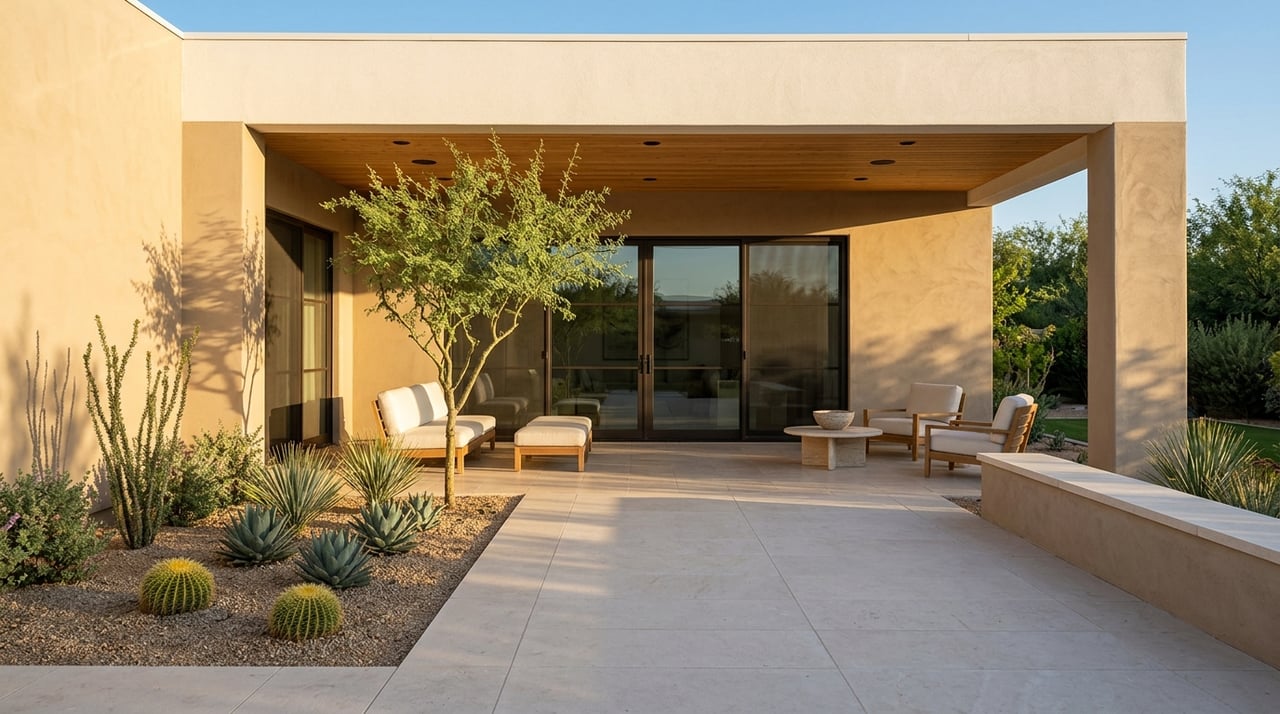
In Cave Creek, outdoor spaces are part of the main event. Patios, pools, outdoor kitchens, shade structures, and view-facing seating areas can strongly influence how buyers experience the property.
This is especially true in the warmer months. In the broader Phoenix metro, NOAA climate normals show average daily highs of 104.2 degrees in June, 106.5 degrees in July, and 105.1 degrees in August. In that context, buyers are likely to notice whether cooling systems, shade, and pool equipment feel ready for real use.
Improve curb appeal with local character
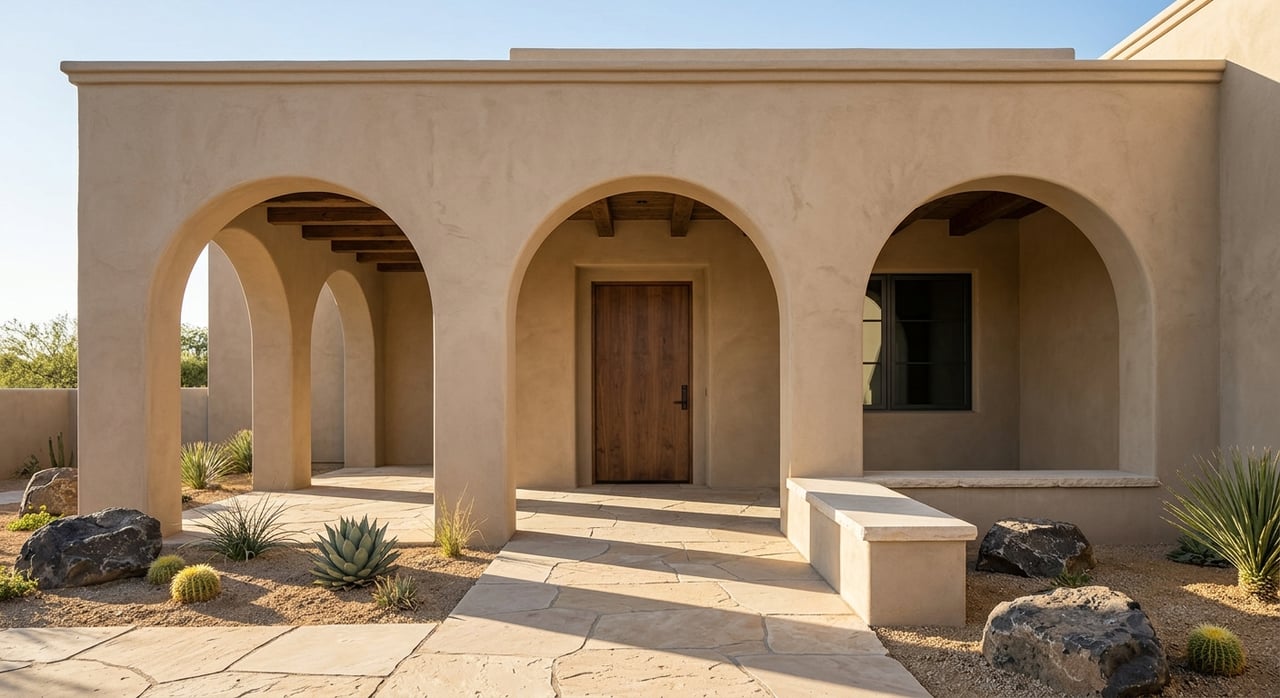
General curb appeal advice still matters. Seller guidance from the National Association of Realtors recommends looking at the home from the street and evaluating landscaping, paint, roof condition, windows, shutters, the front door, house numbers, and window treatments.
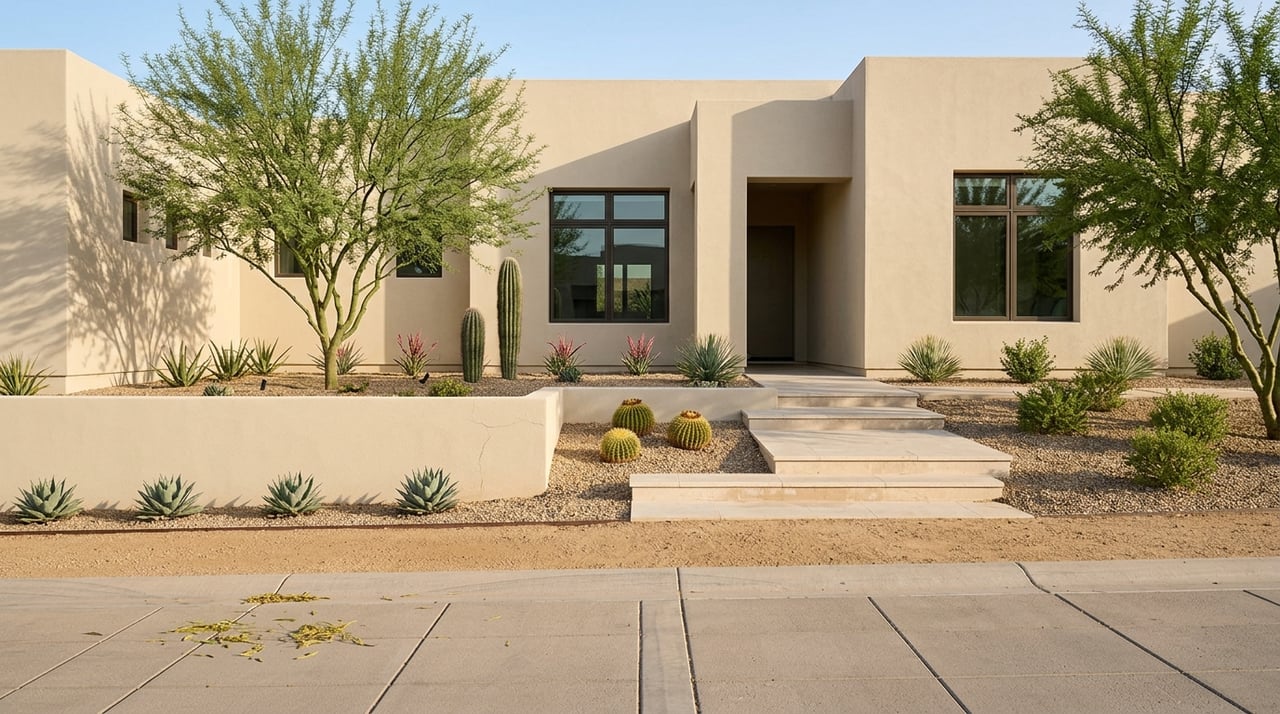
In Cave Creek, though, curb appeal should feel appropriate to the setting. The town’s landscape code is designed to protect natural habitat, preserve undisturbed areas, and support the use of indigenous plants. That means a tidy, desert-adapted landscape often fits the market better than something that looks overworked or out of place.
If your irrigation is inefficient or your planting beds look tired, it is worth refreshing them. Arizona Department of Water Resources guidance notes that as much as 70% of residential water use in Arizona can happen outdoors, so efficient irrigation is both practical and visually relevant.
Keep acreage and access points orderly
If your home includes acreage, equestrian features, or trail-adjacent land, do not treat those areas as secondary. Buyers will notice fencing, gates, driveways, access paths, and the condition of the edges where the property meets open space.
In Cave Creek, those features help tell the story of how the property lives. Orderly presentation can make the land feel intentional and usable, while neglected edges can create uncertainty.
Check your exterior lighting
Outdoor lighting deserves special attention before listing. Cave Creek’s guidance says outdoor lighting must be fully shielded and cast downward, visible bulbs are not allowed in clear fixtures, dusk-to-dawn lights are prohibited, and landscape lighting timers should be shut off when not needed.
This is more than a compliance detail. Lighting can affect how the property feels in twilight photos, evening showings, and drive-up impressions. A clean, well-placed lighting plan supports both presentation and the area’s dark-sky character.
Prep for photos in the right order
Luxury marketing starts online, and that makes photography prep critical. The National Association of Realtors notes that most buyers shop online first, and that high-resolution photos and video tours are essential.
Its photo-shoot guidance also warns that the camera magnifies clutter and grime. Before photography, sellers are advised to open blinds, remove refrigerator magnets, reduce distracting decor, pare back furniture, add greenery, and make sure the home is polished enough to match what buyers will later see in person.
Use this launch sequence
The most effective order is simple and practical:
- Finish repairs
- Deep clean
- Declutter
- Stage the main rooms
- Photograph the home
This sequence helps you avoid a common mistake: taking photos before the home is fully reset. Once your listing is live, your visual first impression is already doing its work, so it pays to get it right.
Highlight what makes Cave Creek special
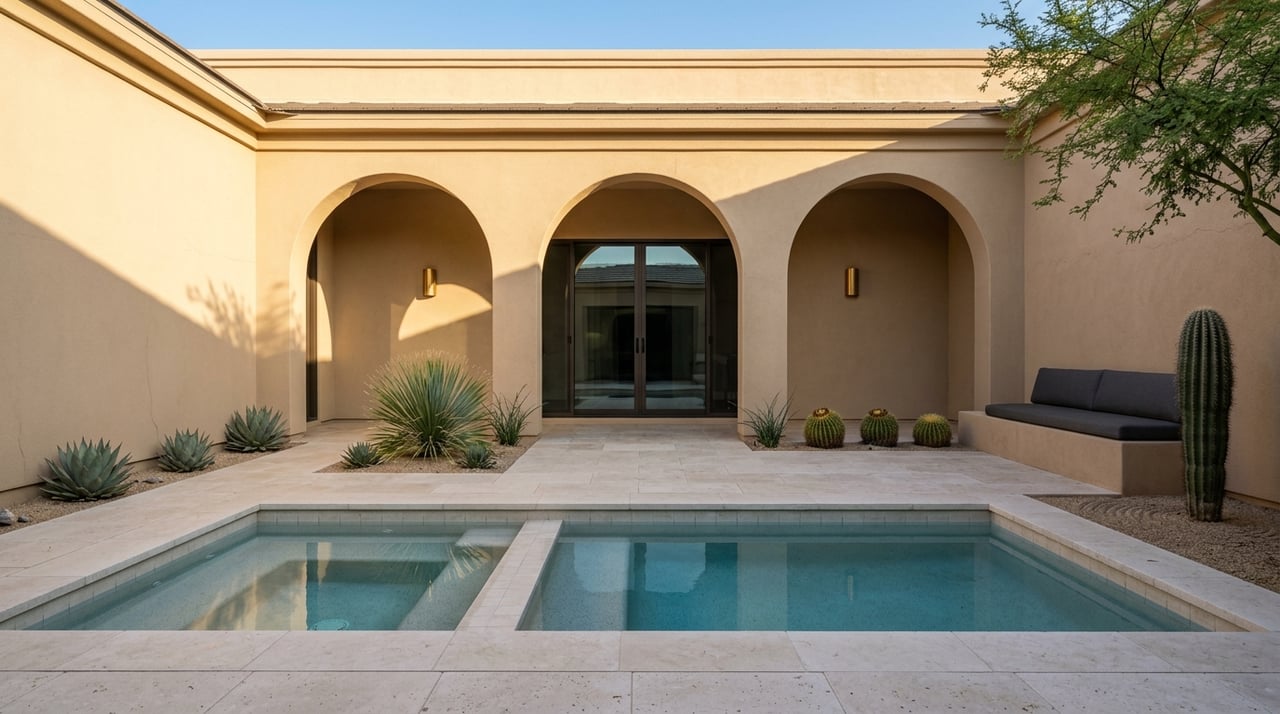
For many Cave Creek luxury homes, the strongest images will not stop at the foyer or kitchen. They often include patios, pools, privacy features, desert plantings, and view corridors that reflect the property’s setting.
The key is to make those features feel intentional. Given the town’s emphasis on desert character and dark skies, clean lines and tidy outdoor spaces often photograph better than heavy styling.
Avoid over-improving before sale
It is easy to overspend when preparing a luxury property. But in a balanced market, large projects do not always translate into stronger buyer perception or a better outcome.
In many cases, the safer investment is visible readiness. Buyers respond to homes that feel cared for, functional, and easy to enjoy from day one. Fresh paint, strong HVAC performance, clean outdoor spaces, and crisp presentation usually do more for launch strength than a costly redesign that may not match the next owner’s taste.
If you are considering major exterior or landscape work, check local permit requirements first. Cave Creek’s building department regulates construction, and the town’s landscape code states that landscape improvements or revegetation require a building permit.
Build a seller prep plan that fits your home
Every Cave Creek luxury property has its own prep priorities. A lock-and-leave second home will need a different strategy than an equestrian estate, a view property, or a home with a well, private road access, or extensive outdoor amenities.
The best plan is usually the one that protects what makes the home feel like Cave Creek while removing distractions that could slow a buyer down. When you focus on repairs, presentation, and local details that matter, you give your home the best chance to make a strong entrance.
If you are preparing to sell in Cave Creek and want a thoughtful, high-touch strategy, Mary Jones can help you identify the updates that matter most and position your home for a polished launch.
FAQs
What should you fix before listing a luxury home in Cave Creek?
- Start with a pre-list inspection and focus on roof, HVAC, pool and spa equipment, irrigation, drainage, exterior lighting, and the property’s water and sewer setup.
Why does outdoor presentation matter for Cave Creek luxury homes?
- Buyers in Cave Creek often evaluate the property as a lifestyle asset, so patios, views, desert landscaping, gates, trails, and privacy features can shape first impressions.
How important is staging for a Cave Creek luxury listing?
- Staging can be very helpful because NAR’s 2025 survey found that many agents saw stronger offered value and reduced time on market, especially when key rooms were prepared well.
What rooms should you stage first in a Cave Creek luxury home?
- Prioritize the living room, primary bedroom, dining room, and kitchen, since these spaces tend to carry the most weight in buyer perception and listing photography.
What local issues should Cave Creek sellers check before going live?
- Review wildfire readiness, outdoor lighting rules, irrigation efficiency, and any utility details related to water service, sewer availability, or private road access.
Should you do major renovations before selling a Cave Creek luxury property?
- Usually, the safer move is to spend on cleanliness, repairs, curb appeal, and functionality first, since major redesigns may not change buyer perception enough to justify the cost.